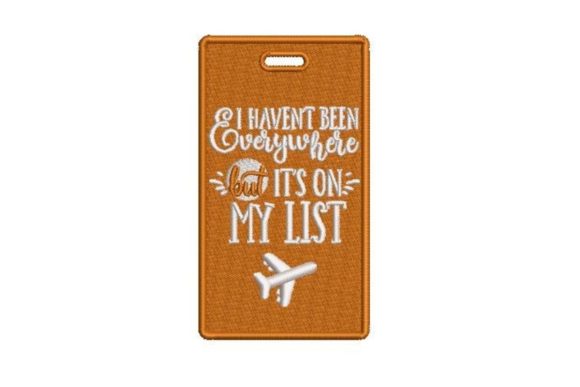
A Designer's Hands-On Review: I Haven't Been Everywhere
When you're in the business of turning digital files into tangible, beautiful products, a design's promise on screen is only half the story. The real test is how it performs in the hoop, on the fabric, and ultimately, in the hands of a customer. Today, I'm looking at the I Haven't Been Everywhere embroidery design from a purely practical standpoint: as a designer preparing to use it for real projects.
First Impressions: A Cheerful Canvas for Creativity
The immediate mood of I Haven't Been Everywhere is optimistic and inviting. The description calls it "cheerful," and that feels accurate. It isn't a stern, blocky statement; it has a visual personality that suggests adventure and possibility. This isn't just a text—it's a designed piece. The layout and shaping give it a handcrafted feel that aligns perfectly with the ethos of a handmade product or personalized gift. My designer instinct places this naturally on items meant to inspire or commemorate: a custom tote bag for a traveler, a cozy sweatshirt embroidery for a road-trip lover, or a decorative pillow cover in a study.
The Right Project for This Personality
Let’s talk real-life scenario. I’m considering it for a line of embroidered patch tote bags for my small shop. The design’s theme, a Travel Quotes category classic, has broad appeal. I imagine it stitched onto a sturdy canvas bag—the kind someone uses for library books, market hauls, or as a carry-on. The cheerful tone makes it a giftable item, not just a utilitarian one. It could easily transition to a baby embroidery project on a denim jacket for a little explorer, or as a subtle, meaningful accent on a kitchen towel or apron. Its strength is its versatility within a specific emotional niche.
Performance on Actual Products: A Practical Assessment
The product description highlights it as "very well digitized" and "easy to embroider." In the world of machine embroidery design, these are the golden phrases. A well-digitized file means predictable results: consistent stitch density, clean transitions between satin stitch and fill stitch areas, and minimal thread breaks. This directly impacts customer trust and your own efficiency. For a craft business pumping out holiday embroidery gifts or a boutique building a consistent brand, reliability in stitching is paramount.
On custom apparel like t-shirts and sweatshirts, a design like this needs to balance visual weight. It should feel substantial without being overly dense, which can stiffen lightweight fabrics. The mention that it "comes with multiple" likely refers to file formats or sizes, which is crucial. You’d use a smaller version for a cap or baby clothes, and a larger one for that tote bag design. This adaptability increases its value as a digital embroidery file for Etsy sellers and apparel decorators.
Where to Exercise Caution
Even with a good file, context matters. On very textured fabrics like some blankets or thick towels, fine details can get lost. If the design has intricate, tiny lettering, it might blur on napped textures. Stretchy fabric requires extra stabilizer and attention, though a robust digitization helps. For dark fabric, thread color contrast is key—a test stitch on scrap material is non-negotiable. I’d also be mindful using it on curved surfaces like the front of a cap; the design’s layout must be naturally accommodating or the digitizer should have provided a specifically adapted version.
Impact on Your Business and Craft
From a commercial perspective, I Haven't Been Everywhere affects more than just stitch quality. Its visual appeal and stitching clarity elevate the perceived value of the finished product. A clean, cheerful embroidered item looks professional and intentional, which supports brand consistency for a small shop product. For creative entrepreneurs, it becomes a reliable design asset for creating printable mockups and building product lines around a theme. Its giftability is high, making it a strong candidate for holiday gifts or wedding gifts for adventurous couples.
Essential Designer Notes Before You Hoop It
Before running this file for any embroidery project, my routine applies:
- Always test the design on scrap fabric first, using the same material and stabilizer as your final product.
- Check thread color contrast against both light and dark backgrounds. Some designs pop on one and fade on the other.
- Review stitch density by looking at the file in your software. A very dense area on a lightweight tee might require a different approach.
- Confirm hoop size compatibility. Does the design come in a size that fits your target item? Don't assume.
- Inspect small details in the digitized preview. Are corners sharp? Are letterforms clear?
- For commercial embroidery or selling finished items, confirm licensing before proceeding. Not all files are cleared for commercial use.
The description says it comes with multiple files, which is a great start. This likely means you can choose the right hoop size for your project, from a delicate baby embroidery on a onesie to a statement piece on a bag. Use that flexibility.
A Design Ready for the Journey
In conclusion, I Haven't Been Everywhere presents itself as a thoughtfully crafted embroidery file with a strong, cheerful personality. It feels destined for projects that carry meaning—gifts, personal keepsakes, and boutique merchandise that tells a little story. Its reported ease of embroidery translates directly to fewer production headaches and more consistent, professional-looking results. For the maker, the digital product seller, or the apparel decorator, it’s a design that seems ready to work with you, not against you. Just remember the golden rule of any machine embroidery design: trust, but verify with a test stitch. Your scrap fabric is the first true destination on its journey.